

Companies increasingly demand finance experts who can think strategically, collaborate across departments, and use financial insight to drive real business decisions.
If you want to stay relevant, accelerate your career, and command higher compensation, certifications are fast becoming one of the smartest investments you can make.
Recent data from our Finance Alliance Salary Survey shows this clearly: individuals with advanced credentials earn significantly more than their less-qualified counterparts, and mastering critical skills dramatically boosts earning potential.
Certifications and advanced training pay off
One of the most compelling findings from our salary survey is how education level correlates with compensation.
Finance professionals holding a Master’s degree report average earnings of $137,121, compared with $96,573 for those with only a Bachelor’s degree.
That’s roughly a 40-45% differential, a huge jump reflecting the value organizations place on deeper training, broader knowledge, and (implicitly) the kind of analytical and strategic thinking often honed in advanced studies.
But academic degrees on their own aren't always sufficient, especially in a dynamic business environment where new challenges and technology disrupt traditional models.
This is where specialized certifications come into their own. They don’t just signal academic achievement, they demonstrate that you have the up-to-date practical skills employers actually need.
Consider what happens when you combine experience with skill mastery.
The salary survey shows that respondents describing themselves as “still developing skills” earn just $40,081 on average. In stark contrast, those who report having mastered their skills earn around $147,549.
This massive gap underscores the reality that capability drives value: not just raw years on the job, but the tangible, validated ability to apply financial insight, adapt to new challenges, and contribute meaningfully to business strategy.
Certifications are one of the most efficient ways to close that gap.
 Finance Alliance
From number-crunching to strategic partnership
Why is there such a premium on advanced skills and certifications? Because finance roles themselves have changed dramatically in recent years.
Organizations face increasingly complex regulatory environments, volatile markets, rapid digital transformation, and fast-changing business models.
In that context, finance functions must evolve. Reporting alone isn’t enough. Finance professionals are now expected to:
- Provide forward-looking forecasts rather than backward-looking accounting
- Interpret financial data in a business context, turning numbers into insights
- Influence strategic decisions through clear communication and collaboration
- Partner with non-finance departments (operations, sales, product teams) to shape company strategy
In short: finance teams must become strategic partners rather than isolated number-keepers. Traditional accounting or finance training often falls short on these competencies.
That’s why certifications focused on business partnering, forecasting, and data storytelling are in high demand: they bridge the gap between technical finance skills and real-world business impact.
Certifications that match real skills: What to look for
Given this shift, it’s not enough to pick any finance certification. The difference lies in what the certification teaches, how practical it is, and how recognized it is in the industry.
Here are the key characteristics of a “worth it” certification:
- Focus on applied skills: Not just theory, but frameworks, tools, and methods you can use immediately at work.
- Business-partnering and communication skills: Helping finance professionals translate numbers into persuasive stories and actionable insights.
- Forecasting, budgeting, and data interpretation: Enabling professionals to plan ahead, build financial models, and make robust projections.
- Flexibility and accessibility: Online, self-paced options accommodate working professionals.
- Recognition and credibility: Certification from a respected organisation or instructor, ideally one with real-world finance leadership experience.
When a certification delivers on these aspects, it gives you real leverage for better roles, higher compensation, and greater influence within your organization.
 Teresa Garanhel
How two leading certifications tackle the skills gap head-on
To illustrate how a modern finance certification can align with the needs above, let’s look at two courses we offer at The Alliance that are designed with today’s finance realities in mind.
Both courses are 100% online, self-paced, and built around practical application.
Business Partnering & Storytelling Certified: Masters
This course is aimed at finance professionals who want to go beyond spreadsheets and reports, those who want to become strategic business partners.
Over five hours of video lessons, the course helps participants master:
- How to build strong working relationships across the business
- Techniques to influence decision-makers and communicate complex financial insight in simple, compelling ways
- Methods to turn raw financial data into narratives that drive business planning and strategic action
By the end, learners are equipped to shift from “number cruncher” to “influential advisor,” ready to sit at the decision-making table.
The certification offers lifetime access to all content (including slides, templates, example decks) meaning the learning doesn’t end when you pass the exam, but evolves as your career progresses.
What this course offers aligns strikingly well with the areas where those who master their skills see the biggest payoffs in the salary survey.
 The Alliance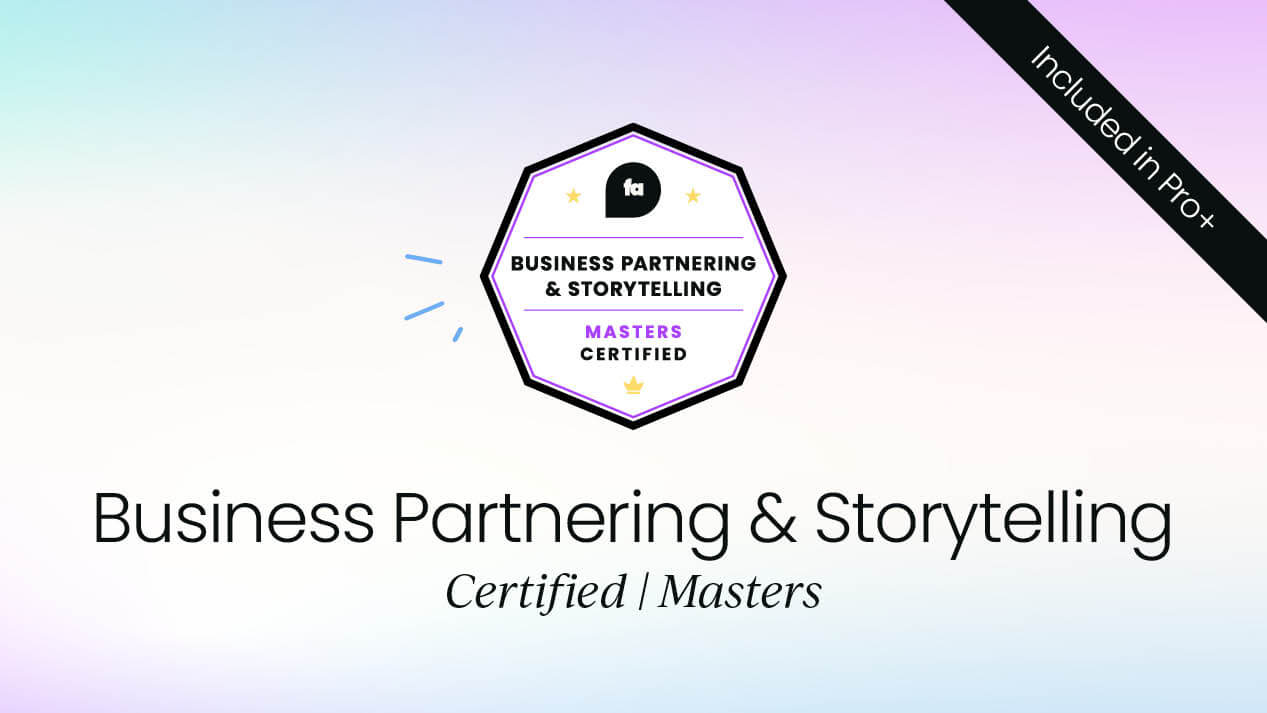
Budgeting & Forecasting Certified: Masters
Forecasting, modeling, budgeting are increasingly critical in a world where business leaders expect agility, rapid iteration, and financial foresight.
The Budgeting & Forecasting Certified: Masters course equips finance professionals with the frameworks and technical know-how to build robust budgets, perform variance analyses, and deliver forecasts that guide strategic planning.
Given that the most significant salary increases come with skill mastery, this course speaks directly to the core of what elevates a finance professional’s value in the job market.
The course aligns with modern FP&A and strategic finance requirements: accurate forecasting, scenario planning, and financial discipline.
 The Alliance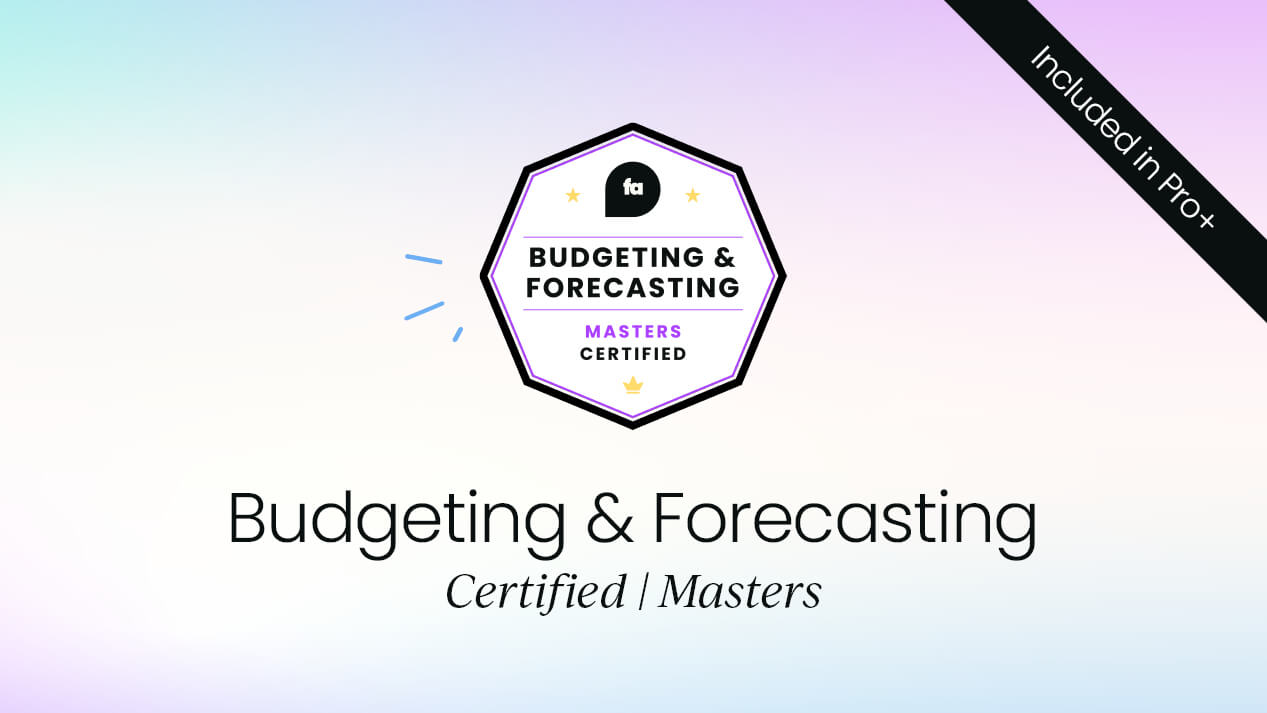
The ROI of certification: Why it makes financial sense
You might be thinking: “Certifications sound great, but are they worth the cost and time?” The numbers suggest: yes, absolutely.
Consider that mastering relevant skills correlates with an average salary of $147,549, compared with $40,081 for those still learning. That difference alone can more than cover the cost of multiple certifications many times over.
Even against the backdrop of passive career progression (years of experience), the premium for demonstrated mastery is enormous.
A certification that takes a few hours (but delivers frameworks, skills, and confidence) can accelerate your trajectory in a way that years on the job sometimes cannot.
On top of that, because both of the courses above are self-paced and online, you don’t need to take a career break, relocate, or sacrifice your current role.
You can learn while working, and often apply what you learn immediately, giving you a fast return on investment.
Who benefits most from certifications?
So, who stands to gain the most from taking a finance certification now? Here are a few common scenarios:
- Early to mid-level finance professionals: If you want to progress beyond transactional accounting or reporting roles into more strategic, FP&A, or business-partnering positions, certifications help you build the mindset, skills, and language to make that leap.
- People moving from technical finance roles to business-facing ones: For accountants who have strong technical acumen but lack stakeholder-facing experience, the “Business Partnering & Storytelling” course helps develop communication and influence skills that are rarely taught elsewhere.
- Experienced professionals looking to future-proof their careers: As automation and AI change the finance landscape, strategic insight, forecasting, and storytelling will remain in high demand. Certifications help senior professionals stay relevant and position themselves for leadership.
- Finance teams in transition: If your company is growing fast or shifting to a more strategic operating model, having team members with certifications can help embed best practices, discipline, and a common language across the whole finance function.
In short: whether you are just starting out, aiming for promotion, or planning long-term, a well-chosen certification can be a career multiplier.
Why these skills and certifications will be critical in 2026
The finance profession is at a crossroads. Basic accounting and routine reporting are more automated than ever. Software tools handle reconciliations, bookkeeping, and even basic forecasting.
As that happens, the real value of finance professionals shifts toward interpretation, insight, influence, the human, strategic side of finance that machines cannot replicate.
Organizations increasingly expect finance teams to be proactive partners in shaping strategy, not just reactive record-keepers.
That means being able to communicate clearly with non-finance colleagues, build trust, influence decisions, translate data into business impact, and think long-term.
So, certifications focused on business partnering, forecasting, and storytelling are essential. These credentials directly align with the skills that are becoming increasingly scarce and valuable.
 Teresa Garanhel


Finance alliance insider
Thank you for subscribing
Level up your finance alliance career & network with finance alliance experts.
An email has been successfully sent to confirm your subscription.
 Follow us on LinkedIn