


Most finance professionals don't feel fairly paid, and the market is giving them more reasons to leave. Retention is now one of the most important jobs a finance leader has.
The hiring market has turned. In a recent study, 61% of finance leaders reported minor or significant shortages of accounting, finance, and CPA talent, a 31-point reversal from a talent surplus the year before.
The same research argues that keeping experienced employees often delivers more value than replacing them.
The Finance Alliance Salary Report shows where the retention risk sits.
The retention problem in numbers
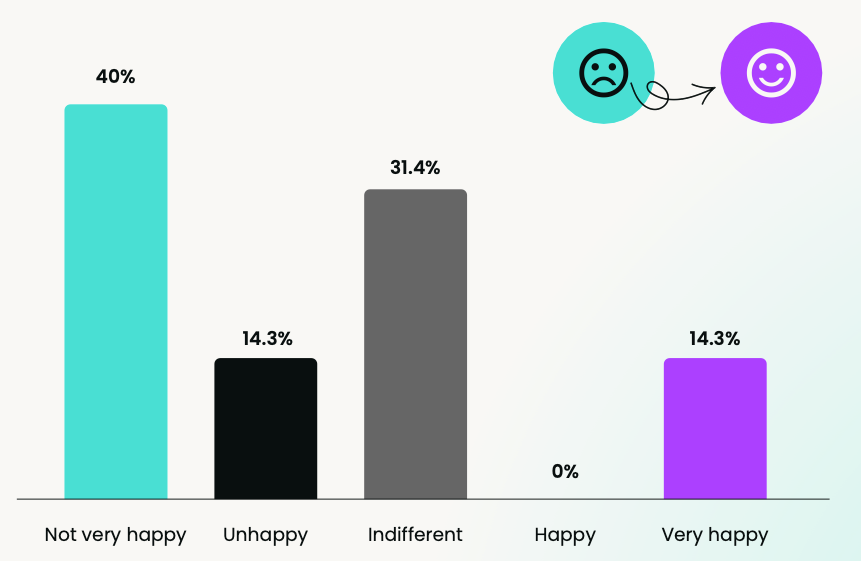
More than half of finance professionals in our survey (54.3%) are unhappy with their pay.
Only 14.3% say they're very happy.
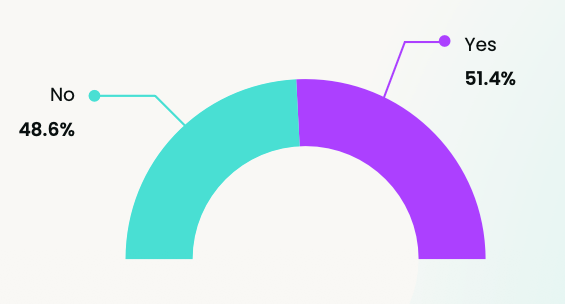
The fairness data is just as stark. Only 14.3% say their salary fully reflects their role and everything it involves. Another 45.7% say it doesn't, and 40% say it does "for now" but expect a raise soon.
That last group is the one to watch. They're giving you time, not loyalty. If the raise they expect doesn't arrive, they're likely to start looking.
The gap extends to perceived value too. Nearly half of respondents (48.6%) believe their position's salary doesn't reflect the business value the role adds.
1. Benchmark pay against the right market
You can't fix a pay gap you haven't measured, and finance salaries vary too widely for a generic benchmark to work.
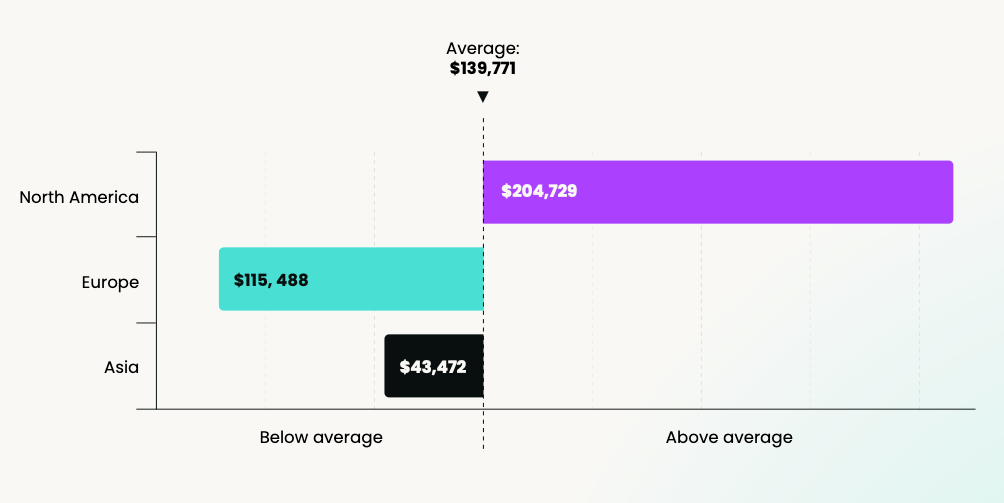
Location is the biggest swing factor. Average total compensation in our survey was $204,729 in North America, $115,488 in Europe, and $43,472 in Asia.
Industry matters almost as much. Finance professionals in healthcare averaged $204,875, while those in financial services averaged $78,833.
If you're in a lower-paying sector, your people may be one recruiter call away from a big raise elsewhere.
Structure plays a part as well. Respondents at companies with an established finance team averaged $124,558, compared with $84,524 at companies without one.
The pressure on employers is real.
Unemployment among accounting professionals is hovering between 1% and 2%, meaning nearly all skilled professionals are already employed, and 80% of finance and accounting leaders are concerned about keeping pace with candidates' pay expectations.
What to do: Benchmark each role against peers in the same region, industry, and company size. Review it at least once a year, not only when someone hands in their notice.
2. Make pay-rise criteria clear
Nearly half of finance professionals in our survey don't know what it takes to earn a raise.
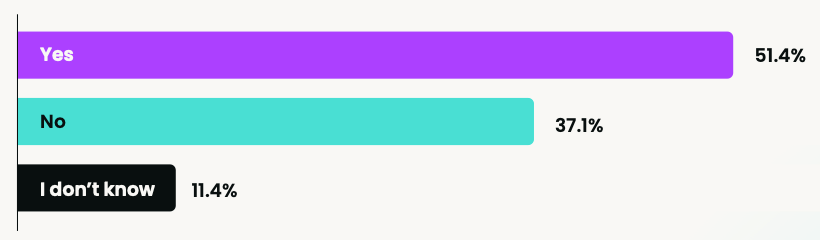
Only 51.4% say pay increases at their company follow set criteria. Another 37.1% say there are no clear criteria, and 11.4% don't know how raises are decided.
Where criteria exist, they vary widely. Respondents described promotion-linked raises of 10% or more, merit tied to company targets, annual KPI reviews, and fixed pools that managers divide up.
One respondent described their company's approach as "a blend of the company hitting targets and individual performance".
Another noted that taking on a bigger scope of work is often required, but doesn't guarantee a pay bump.
Regulation is pushing in the same direction. In the US, a growing number of states require employers to disclose pay ranges, and some of these rules also cover internal opportunities such as promotions and transfers.
In Europe, the deadline for EU member states to transpose the Pay Transparency Directive passed on 7 June, and only a few member states made it on time.
Under the directive, employers of all sizes must be ready to give workers written information on request about their own pay and average pay levels, broken down by sex, for comparable roles.
The UK has also signalled that similar measures are under consideration.
What to do: Write down how raises and promotions are decided, and share it with your team. Include what good performance looks like, how often pay is reviewed, and typical increase ranges. Ambiguity breeds suspicion, and suspicion breeds resignations.
3. Pay for the responsibility people actually carry
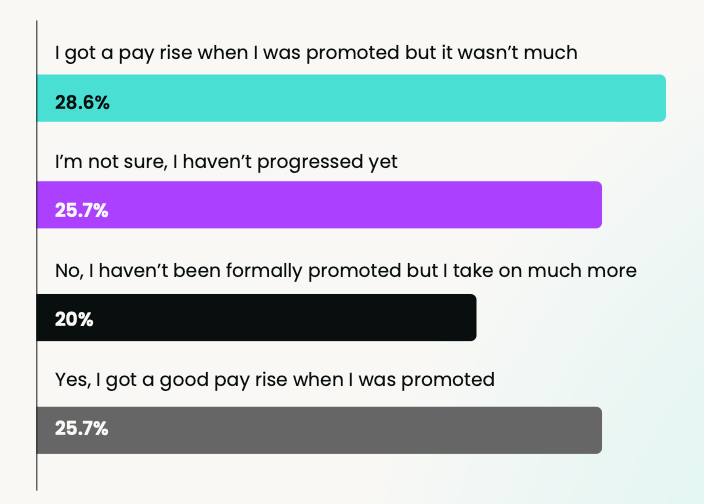
Many finance professionals are doing more without being paid more. In our survey, one in five (20%) say they haven't been formally promoted but take on much more than their job description.
Another 28.6% got a pay rise when they were promoted, but say it wasn't much. Only 25.7% say they got a good pay rise with their promotion.
The pace of raises is uneven too. Over the last three years, 5.7% haven't had a single pay increase, and 31.4% have had just one.
What to do: Audit roles for "scope creep". Where someone is consistently working above their grade, promote them, adjust their pay, or take work off their plate. Make sure promotions come with an increase people will actually notice.
4. Build progression paths inside your company
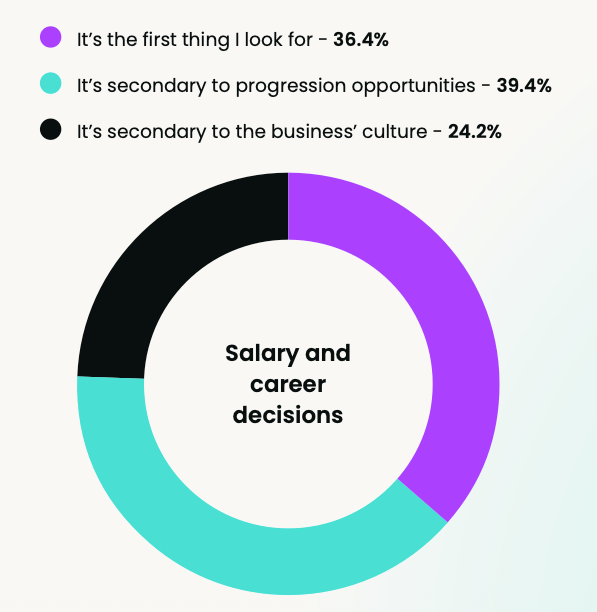
Progression matters more than pay for many finance professionals.
When we asked how salary factors into career decisions, 39.4% said it's secondary to progression opportunities, slightly more than the 36.4% who said salary is the first thing they look for.
Our data also shows why people leave to progress. Professionals who have worked at six or more companies average $206,241, compared with $79,615 for those who have worked at one or two.
Loyalty doesn't always pay: people with 9–11 years at their current company averaged $109,200, well below the $140,083 earned by those with 6–8 years.
In other words, moving on is often the quickest way up. Your job is to make moving up possible without moving out.
Leadership opportunities are one lever. Respondents managing more than 10 people averaged $187,375, while those managing no one averaged $99,627.
What to do: Map clear career paths for each role, including what's needed to reach the next level. Hold regular career conversations, and offer stretch assignments, team leadership, and internal moves before your people look for them elsewhere.
5. Look beyond base pay
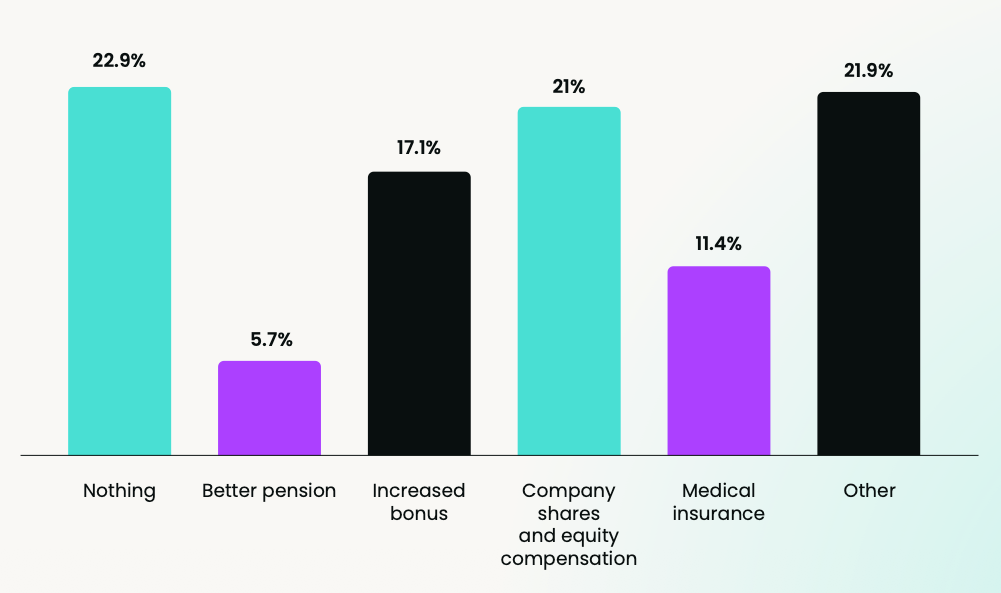
When we asked what they'd change about their compensation besides salary, finance professionals gave a wide range of answers.
Company shares and equity came top at 21%, followed by increased bonuses (17.1%), medical insurance (11.4%), and better pensions (5.7%).
Another 21.9% chose "Other", mentioning things like flexible work, better incentives, and improved office conditions. Only 22.9% said they wouldn't change anything.
Flexibility deserves special attention.
Robert Half found that among the 73% of workers planning to stay in their current roles for now, many named flexibility as the main reason, ahead of company culture, manager relationships, professional fulfilment, and pay.
What to do: Ask your team what they value rather than guessing. Consider equity or long-term incentives for key people, performance or retention bonuses, and flexible working, especially if you can't match competitors on base salary.
6. Invest in skills, and pay for them
Skills have a huge effect on pay. In our survey, respondents still developing relevant skills averaged $40,081.
Those with several relevant skills averaged $110,188, and those who had mastered relevant skills averaged around $147,500.
Respondents with a Master's degree averaged $137,121, compared with $96,573 for those with a Bachelor's.
There's a catch. Training makes your people more valuable, including to other employers. Development without matching pay progression can turn your team into a training ground for competitors.
What to do: Fund courses, qualifications, and cross-training, but tie new skills to clear pay and role changes.
 Teresa Garanhel
7. Don't underestimate culture
Nearly a quarter of our respondents (24.2%) said salary is secondary to a company's culture.
That's a sizeable group whose decision to stay or go depends on how work feels, not just what it pays.
What to do: Invest in good managers, recognise contributions openly, and protect your team from burnout during busy periods like year-end close.
The bottom line
Finance talent is scarce, and most finance professionals feel underpaid, under-recognised, or unsure how to progress. That's a risky mix for any employer.
The good news is that the fixes are within your control.
- Benchmark pay properly,
- Make raise criteria transparent,
- Reward extra responsibility,
- build internal career paths,
- Offer more than base salary,
- Invest in skills, and
- Keep an eye on culture.
The companies that act on these now will be the ones that keep their best people.


Become an FA Insider
Thank you for subscribing
Get exclusive insights, frameworks, and strategies from finance leaders driving real business impact.
An email has been successfully sent to confirm your subscription.
 Follow us on LinkedIn