

Corporate risk management has long been sold as a simple proposition: identify risks, hedge them with derivatives, and protect shareholder value.
But new research from René M. Stulz reveals a more complex reality.
While financial instruments can effectively manage certain near-term risks, they prove surprisingly limited when companies face the uncertainties that matter most for long-term survival and growth.
The foundational shift in risk management thinking
Traditional finance theory teaches that diversified investors can manage idiosyncratic risk themselves, making corporate risk management unnecessary.
Stulz challenges this orthodoxy with a compelling analogy: saying firms shouldn't manage risk because investors can diversify is like saying buildings shouldn't have sprinkler systems because owners have insurance.
The sprinkler system prevents destruction that insurance money cannot reverse.
This perspective fundamentally changes how we should think about corporate risk management.
When adverse outcomes carry deadweight costs that destroy value permanently, risk management becomes essential for maximizing shareholder wealth.
These costs manifest in various ways: talented employees leave distressed firms, customers abandon companies they fear might not honor warranties, and valuable investment opportunities disappear when internal funding dries up.
The research identifies several key mechanisms through which risk affects firm value.
Managers, unlike diversified shareholders, cannot easily hedge their human capital and thus may reject valuable but risky projects without proper risk management tools.
Financial distress imposes costs that extend far beyond immediate cash flow problems. Companies in distress see their competitive position erode as stakeholders lose confidence.
Tax optimization becomes impossible when volatile earnings prevent companies from fully utilizing debt tax shields.
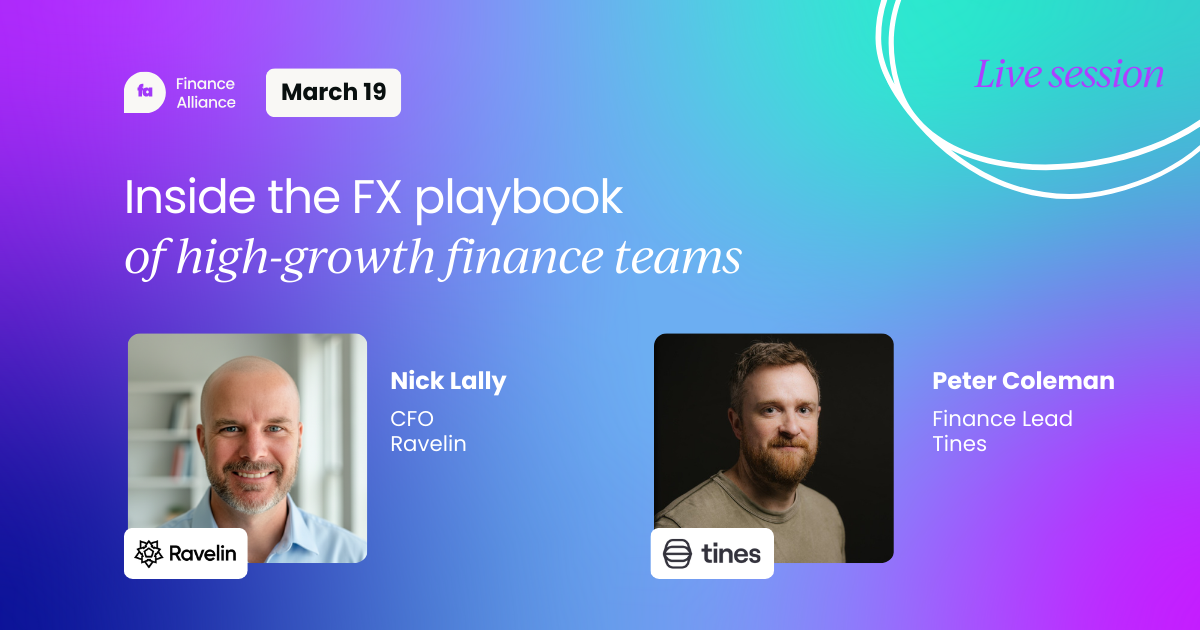
Join us on March 19 for a practical live session on managing FX risk.
The reality of derivatives use reveals surprising limitations
Despite the theoretical promise of financial risk management, empirical evidence paints a picture of limited implementation.
While approximately 60% of large nonfinancial firms use derivatives, their usage remains remarkably narrow in scope.
The most striking findings come from studies of companies with clearly identifiable exposures. Gold mining firms, whose value directly ties to gold prices, hedge on average only 25% of their production over the next two years.
Oil and gas producers show similar patterns, hedging about 33% of production when they hedge at all.
More remarkably, these companies hedge just 4% of their reserves, focusing almost exclusively on near-term production rather than long-term value.
This limited hedging extends across industries. Companies primarily use derivatives for specific, well-defined transaction exposures like a foreign currency payment due in 90 days.
They rarely attempt to hedge their overall economic exposure or firm value directly. Even when companies use derivatives, the economic impact often proves modest.
Research shows that for a typical firm, a three-standard-deviation move in interest rates, exchange rates, and commodity prices simultaneously would change the value of their derivatives portfolio by only 1% of market value.
Why financial risk management faces inherent constraints
The limited use of derivatives isn't simply a failure of implementation. Stulz identifies three fundamental constraints that prevent financial risk management from addressing many critical corporate risks.
 Asif Masani
Complexity and uncertainty create measurement challenges
Short-term transactional risks like foreign currency receivables are straightforward to quantify and hedge. But consider the impact of exchange rate changes on a company's competitive position over five years.
Future cash flows depend on complex, nonlinear relationships involving competitive dynamics, market evolution, and strategic choices.
A company might exit a market if exchange rates move too far, or innovation might completely change its exposure profile.
This complexity means that attempts to hedge long-term exposures could actually increase risk rather than reduce it.
If a company hedges based on incorrect forecasts of its future foreign currency exposure, it creates new risks rather than eliminating existing ones.
As one study found, when uncertainty comes from both demand and supply sides, hedging often proves ineffective regardless of the approach taken.
Accounting rules create perverse incentives
The disconnect between economic hedging and accounting treatment creates another major barrier.
Consider a company hedging foreign exchange exposure expected to materialize in three years.
While this hedge might reduce economic risk, it often increases earnings volatility because gains and losses on the derivative flow through quarterly earnings while the underlying exposure remains invisible in financial statements.
This accounting mismatch makes many economically sensible hedges appear destructive to reported performance.
Since management compensation and market perceptions often depend heavily on earnings stability, executives face strong incentives to avoid hedges that increase accounting volatility, even when those hedges would reduce real economic risk.
 Teresa Garanhel
Operational frictions limit implementation
Derivatives require collateral and create liquidity demands that can prove problematic precisely when hedging is most needed.
A company entering financial distress may find itself unable to post required collateral for new hedges or maintain existing positions.
Variation margin calls on existing derivatives can drain liquidity during adverse market moves, potentially accelerating distress rather than preventing it.
These frictions help explain why financially constrained firms often turn to operational hedges like long-term purchase agreements with suppliers rather than financial derivatives.
While potentially less efficient, these arrangements don't require upfront collateral or create ongoing liquidity demands.
Building resilience when hedging isn't enough
Given these limitations, Stulz argues that companies must look beyond financial hedging to build resilience. Resilience represents the ability to absorb adverse shocks while continuing to pursue strategic objectives.
Rather than trying to hedge specific risks that may be unmeasurable or unknown, resilient companies create general capacity to handle whatever challenges emerge.
Financial flexibility forms the foundation of resilience. Companies with conservative capital structures and substantial cash holdings can weather storms that would sink their leveraged peers.
During the COVID-19 pandemic, companies with greater financial flexibility performed significantly better, despite none having specifically hedged against pandemic risk.
This wasn't luck; it was the payoff from maintaining resilience against unforeseeable events.
Operational flexibility provides another dimension of resilience.
This might mean maintaining relationships with multiple suppliers rather than optimizing for the lowest cost, holding strategic inventory despite the working capital cost, or preserving geographic diversification even when concentration would improve margins.
These choices look inefficient through a narrow optimization lens but prove valuable when disruptions strike.
The evidence suggests companies understand this intuitively. Studies of industries facing deregulation show firms responding with multiple tools including cash holdings, operational adjustments, and geographic diversification alongside limited use of derivatives.
The most successful companies don't rely on any single risk management approach but build layered defenses against uncertainty.
 Sabrinthia Donnelly
Implications for AI and algorithmic risk management
This research holds particular relevance for AI applications in corporate finance and risk management.
Current AI models excel at optimizing known parameters and managing quantifiable risks, exactly the areas where financial derivatives work well.
But Stulz's findings highlight a critical gap: the most important risks facing companies often involve radical uncertainty that resists quantification.
AI systems designed for corporate treasury or risk management must recognize these fundamental limitations.
An algorithm optimizing purely for economic efficiency might recommend eliminating "wasteful" cash holdings or pushing leverage to theoretical limits.
But doing so would strip away the resilience that enables companies to survive unmodeled shocks.
The research suggests AI applications in risk management need to incorporate resilience parameters alongside efficiency metrics.
Rather than optimizing for a single predicted future, these systems should evaluate strategies across wide ranges of scenarios, including those that cannot be precisely specified.
The goal shifts from eliminating measurable risks to ensuring survival and strategic flexibility across unknowable futures.
For supply chain AI, the implications are particularly direct. Systems that optimize solely for cost minimization create fragility.
The paper's framework suggests these systems need explicit resilience constraints, maintaining operational slack even when it appears inefficient.
The COVID-19 pandemic demonstrated that companies with "inefficient" supply chain redundancy often outperformed those with lean, optimized operations.
Rethinking risk management for an uncertain world
Stulz's research fundamentally challenges how we think about corporate risk management. The promise that financial engineering could eliminate business risks through clever use of derivatives proves far too simplistic.
While these tools play a valuable role in managing specific, near-term exposures, they cannot address the complex, uncertain risks that truly threaten corporate survival and success.
Instead, companies must embrace a broader conception of risk management that prioritizes resilience alongside efficiency.
This means maintaining financial and operational flexibility that looks wasteful in calm times but proves invaluable during storms. It means accepting that some risks cannot be measured, much less hedged, and preparing for that reality.
For practitioners and researchers in AI and finance, this framework demands humility about what optimization can achieve. The most sophisticated models cannot eliminate the need for judgment about unknowable futures.
Building systems that enhance resilience rather than merely maximizing efficiency represents the next frontier in corporate risk management.
In a world where the next crisis always differs from the last, the ability to survive the unforeseeable matters more than perfectly hedging the risks we can measure.
Learn more about FX risk management
Join us on March 19 for a practical live session about managing foreign exchange risk as your business scales.
You’ll walk away with real-world strategies to protect margins, bring clarity to forecasting and board reporting, and simplify FX management without added complexity.
 Finance Alliance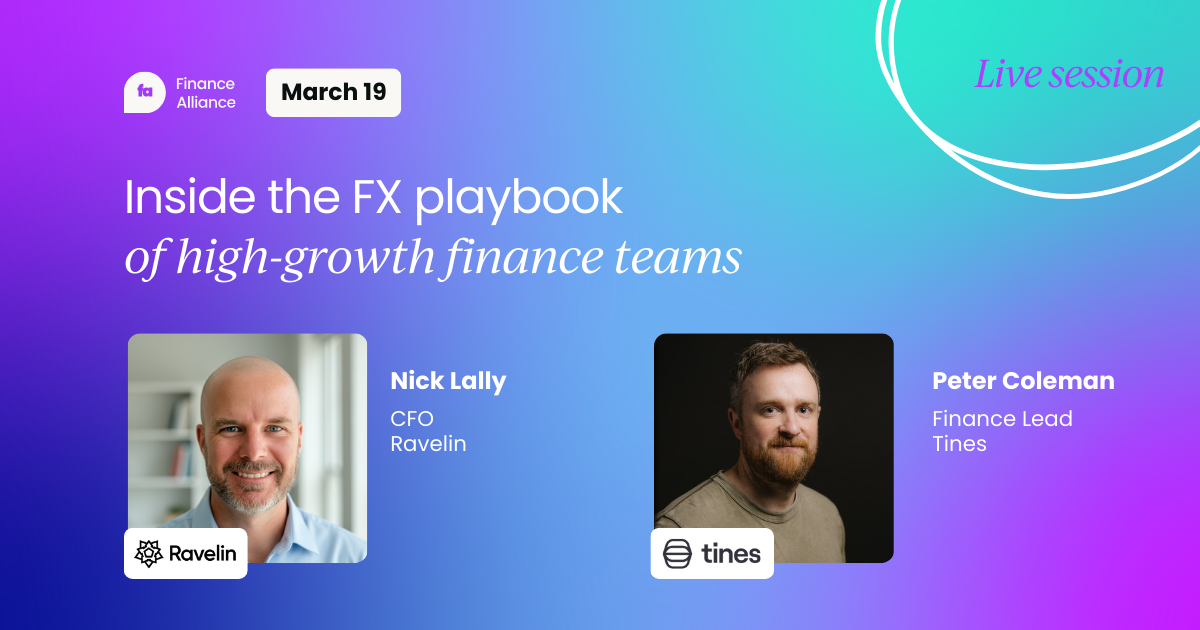


Finance alliance insider
Thank you for subscribing
Level up your finance alliance career & network with finance alliance experts.
An email has been successfully sent to confirm your subscription.
 Follow us on LinkedIn